
Ping pong, also known as table tennis, has grown remarkably popular across the world. From its origins in Victorian England in the late 1880s to its official recognition as a sport in 1926 and its debut at the 1988 Seoul Olympics, the sport has traveled a long road. Today it draws hundreds of millions of fans globally and continues to make inroads in businesses, recreation centers and pop culture alike.
Ping pong was born in England and gained traction as a competitive sport in other countries in the early 1900s, spreading quickly to the United States. The craze took hold so firmly that it landed on the front pages of newspapers. Americans of all ages were eager to play what felt like a sport for the common person — no club membership required, no private court needed. Many bought equipment and played on dining room tables or at social clubs. Demand was so intense that manufacturers struggled to keep up with the supply of nets, paddles and balls. The sport had captured the national imagination.
As it continued to grow, ping pong shed its parlor game image and adopted a more formal identity: table tennis. The sport became a test of technique, strategy and speed — equal parts ac- cessible for beginners and demanding for elite competitors. The first World Championships were held in 1926, and the sport’s inclusion at the 1988 Seoul Olympics marked the culmination of decades of development. The Olympic debut drew 129 athletes from 41 countries, with over 65,000 tickets sold — 70% of them before competition even began. Since that debut, China has dominated the sport, winning 32 of 37 gold medals from 1988 to 2020.
A new wave of popularity Ping pong is now entering another period of rapid growth in the United States, fueled by social media influence and a wave of new organizations dedicated to the sport. That growth is reshaping its image — not as a casual basement activity, but as a professional sport with a massive global following.
Part of that momentum came from Hollywood. Director Josh Safdie’s “Marty Supreme,” starring Timo- thée Chalamet, tells the story of an ambitious table tennis hustler on Manhattan’s Lower East Side in the 1950s, loosely inspired by real-life ping pong champion Marty Reisman. The film generated significant buzz, and in the weeks following its release, ping pong clubs reported increased membership and attendance at competitive matches.
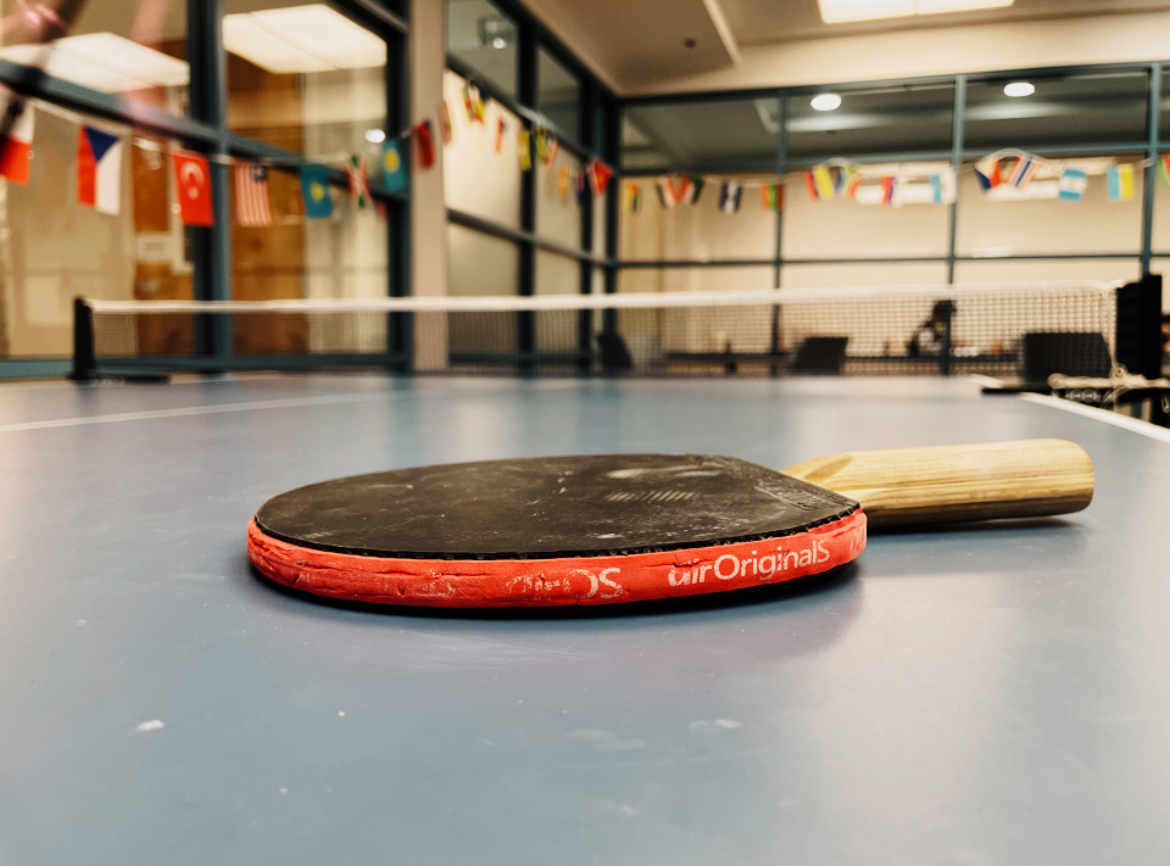
At Hillsborough College’s (HC) Dale Mabry campus, a ping pong table in the student lounge has become more than a place to play — it has become a gathering point for community.
Yazan Othman, an HC student originally from Jordan, said most of the friends he has made at HC came through the ping pong table. Baha Saleh, from Palestine, has only played for a couple of months but already feels welcomed by the community that has formed around the table.
Not everyone comes just for the social experience. Randy Ordonez, who first learned to play on his mother’s kitchen table, has competed at the semi-professional level for three years. Despite being at HC for only one semester, he has made many friends through the table and says he feels at home. Leo Milian, born and raised in Tampa, has been playing for just three weeks. He says the game has helped him build connections at HC and that he enjoys its fast-paced, satisfying nature.
The ping pong table at HC has grown into something the campus did not necessarily plan for: a bridge between students from different countries and backgrounds.
From Victorian-era pastime to the Olympics, ping pong has proven a remarkable ability to stay relevant. Whatever the setting, the sport keeps finding new audiences — proof that a small ball and a small table can make an outsized impact.