
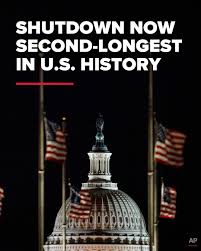
On Oct. 1, the U.S. government shut down after Republicans and Democrats failed to reach an agreement on how to fund federal operations. The central point of conflict was health care tax credits, which Democrats insisted should be included in the funding bill. What many Americans did not expect was for the standoff to stretch into the longest government shutdown in U.S. history, lasting 43 days.
Now that the government has reopened and agencies are slowly returning to full function, the question remains: What lasting effects will this shutdown leave on Americans — especially college students? While students are not always the primary targets of federal budget decisions, they often experience significant secondary consequences, particularly in financial aid, campus employment and essential support programs.
Students at Hillsborough Community College shared that their main concern during the shutdown was the impact on federal financial aid. When the Department of Education shuts down or reduces operations, FAFSA verifications are delayed, Pell Grant disbursements take longer to process, and work-study payments may freeze. For students who rely on timely aid to pay tuition, buy textbooks or cover housing costs, even short delays can create serious hardship. Shutdowns also stall federal student loan processing, leaving some students unable to secure funds they were counting on at the start of the semester.
Another impact many do not immediately consider is the disruption to research across the country. Universities rely heavily on federal grants from agencies such as the National Science Foundation and the National Institutes of Health. When these agencies halt operations, grant approvals, research oversight and funding disbursements come to a stop. This forces universities to pause or slow down major research projects. Undergraduates working as research assistants may temporarily lose income, while graduate students who depend on research funding can face financial instability — adding pressure during an already demanding academic period.
The shutdown’s effects also extend to basic student welfare. Many college students rely on federal assistance programs such as the Supplemental Nutrition Assistance Program (SNAP) or the Low-Income Home Energy Assistance Program (LIHEAP). When these programs face funding gaps or administrative delays, students from low-income households experience increased food insecurity, reduced benefits or interruptions in heating assistance. For students already balancing tuition, rent and living expenses, these disruptions can be destabilizing.
Although the shutdown has officially ended, its repercussions will continue for months — especially with the fall semester wrapping up and a new term, along with new payments, approaching. Financial delays, disrupted research timelines and interruptions in essential federal programs demonstrate that political gridlock in Washington does not only affect the capital. It reaches campuses, classrooms and students’ lives across the country.
And this raises a final question many students have begun asking: Why is the United States the only country that allows its government to shut down?